
So, What Is Claude?
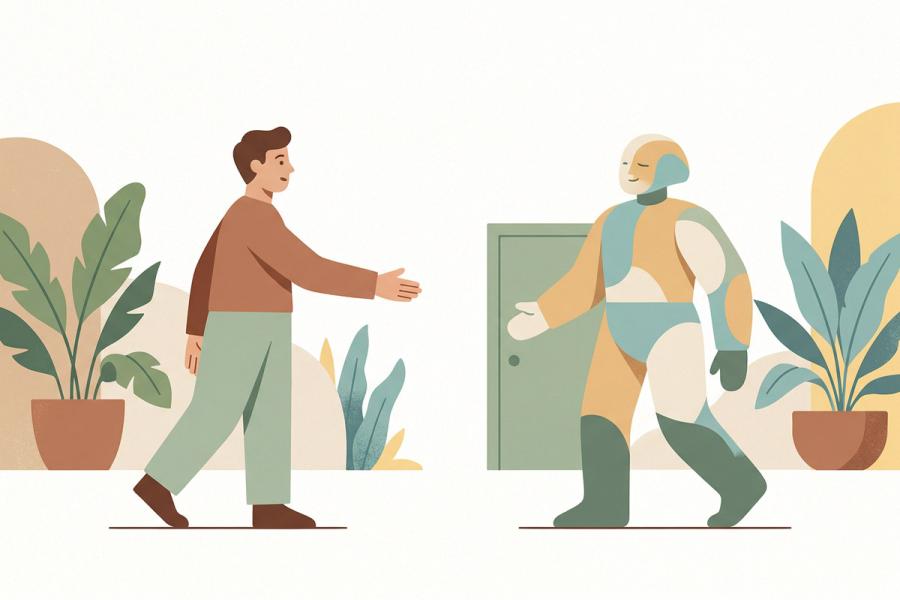
A plain-language introduction for anyone who's heard the word "AI" more times than they can count — and still isn't sure what it means for their business.
You've probably noticed that artificial intelligence has become impossible to ignore. It shows up in news headlines, in conversations with colleagues, in tools you already use without realizing it. And somewhere in that noise, names like ChatGPT, Gemini, and Claude keep coming up.
So what is Claude, exactly?
Claude is an AI assistant made by Anthropic, a company founded with a specific focus on AI safety and reliability. Like other large language models, Claude can read, write, reason, and respond in natural language — meaning you interact with it by typing, the same way you'd message a colleague or search for something online.
But calling it "just a chatbot" undersells it. Claude is less like a search engine (which retrieves existing pages) and more like a knowledgeable collaborator you can think out loud with — one that reads fast, writes well, and doesn't get tired.
What can it actually do?
In practice, Claude handles a wide range of tasks that small businesses and teams deal with every day:
- Writing and editing — first drafts, website copy, emails, bios, social posts, proposals
- Research and summarizing — reading long documents and pulling out what matters
- Brainstorming — generating options, names, angles, ideas when you're stuck
- Strategic thinking — helping you work through decisions, spot blind spots, stress-test plans
- Explaining things clearly — breaking down complex topics into language that actually makes sense
It works in multiple languages, adapts to different tones and contexts, and — importantly — gets better the more context it has to work with.
How is it different from a Google search?
A search engine points you toward existing content. Claude generates a response tailored to your specific situation. You're not getting a list of links — you're getting a direct answer, a draft, or a conversation.
That also means it can handle things that don't have a web page: "How should I handle this specific client situation?" or "Help me rewrite this paragraph so it doesn't sound like a legal document." There's no page for that. Claude figures it out from context.
Is it reliable?
Honestly — it depends on how you use it. Claude is not a database. It can reason well and write clearly, but it doesn't always know the latest facts, and it can occasionally get things wrong. It works best as a thinking and drafting partner, not as a source of record for dates, statistics, or legal or financial advice.
The practical rule: review what it produces. Use your judgment. Treat it the way you'd treat a smart collaborator who needs your sign-off before anything goes out the door.
A word on data and privacy
Before going further, something worth stating clearly: Claude is a powerful tool, but it's still an external service. Anything typed into it leaves your device and is processed by Anthropic's systems. That's worth keeping in mind — especially when working with sensitive information.
At Allabor, we have a firm policy: we never introduce client data into AI tools without explicit permission. That includes business information, customer data, internal documents, financial details, or anything shared with us in confidence. When AI is part of our process, we're transparent about it.
For your own use: the same logic applies. Claude works best with context — but there's a difference between giving it enough background to be useful and pasting in information that belongs to your clients, your employees, or your partners. When in doubt, keep real names and sensitive details out. You can describe a situation clearly without exposing the specifics.
Where does Allabor fit in?
At Allabor, we use Claude as part of our day-to-day work — for drafting, research, and strategic thinking. But more practically: when our clients are also using Claude, collaboration gets faster and more fluid. There's a shared starting point, a common language for the work.
That's part of why we put together this series. Not to say "use AI instead of working with us" — but because understanding what these tools can do changes what's possible when you work with anyone, including us.
This is the introduction of a series on working effectively with Claude and AI tools. The next part covers how to get genuinely useful results from Claude — beyond the generic answers most people get when they first try it.
How to Work With Claude (Not Just Ask It Things)
Changed