
Project management: A practical guide for modern teams

A project is a unique, transient endeavour with defined objectives, a clear start date, and a definite end date. It might be a six-month office relocation, a cloud migration, or an app feature launch. Whatever the scope, project management is the discipline that turns those time-bound efforts into delivered results.
This guide covers everything you need to manage projects confidently in 2024–2026, from foundational definitions and team roles to methodologies, risk management, and the tools that tie it all together.
Key takeaways
- Project management is a structured discipline. It applies processes, methods, and tools to plan, execute, and close work so projects finish on time, on budget, and within scope. Without it, even talented teams waste effort on misaligned priorities and avoidable rework.
- Complexity is rising, making project management more critical. Distributed project teams, tighter budgets, regulatory shifts, and vendor disruptions mean that managing projects without a clear framework is riskier than ever in 2024–2026.
- No single methodology fits every project. Agile, waterfall, and hybrid project management approaches each serve different situations. Choosing the right one depends on how stable your requirements are, how much flexibility you need, and what your stakeholders expect.
- Risk management and project monitoring separate good teams from struggling ones. Proactive identification of project risks and continuous tracking of project progress prevent small issues from becoming expensive failures.
- Simple project management templates and consistent habits compound over time. Standardized charters, risk registers, and status reports reduce setup time and help teams manage projects effectively at scale.
What is project management?
Project management is the discipline of applying processes, methods, skills, knowledge, and tools to project activities in order to deliver a unique outcome within a defined timeframe. The Project Management Institute (PMI) defines it as the application of knowledge, skills, tools, and techniques to meet project requirements, and the International Project Management Association similarly frames it around structured delivery of results.
It helps to understand what a project is not. "Business as usual" refers to ongoing, repetitive operations with no fixed endpoint - maintaining a website, processing daily customer support tickets, or running a manufacturing line. A project, by contrast, has a defined beginning and end, a specific deliverable, and a unique outcome. A 2025 website redesign is a project. A six-month office relocation is a project. Keeping the lights on at the current office is operations.
Understanding why project management is important connects directly to business results. Organizations with strong project management are more likely to achieve strategic objectives because every project is tied to a defined purpose and measured against clear criteria. Project teams focus on specific objectives within a finite timeframe, avoiding drift and wasted effort.
Effective project managers balance what's known as the Project Management Triangle - scope, cost, and time - while also managing quality. They coordinate people, technology, and suppliers, and they make trade-off decisions daily to keep the entire project aligned with its project objectives.
Why project management is important in today's organizations
More work than ever runs as projects. Whether it's software development, hospital expansions, product launches, or marketing campaigns, organizations across industries rely on project-based work to execute strategy and respond to change in 2024–2026.
Structured project management helps organizations navigate uncertainty - supply chain disruptions, remote work challenges, regulatory changes, and shifting customer expectations. Without clear processes, teams default to reactive firefighting, which burns time and budget.
Here's what structured project management delivers:
- Strategic alignment. Each project maps to company objectives, OKRs, or long-term plans. This ensures resources go to work that matters, not to pet projects or low-impact initiatives. Project management helps organizations achieve strategic objectives efficiently.
- Efficiency gains. Planning upfront means fewer delays, less rework, and smarter resource allocation across cross-functional project teams. Structured project management saves time and money by streamlining processes, and it helps identify potential problems early, reducing costs before they escalate.
- Better communication. Effective project management improves communication among team members. Clear communication is essential for aligning teams and updating stakeholders, which reduces misunderstandings and keeps everyone pulling in the same direction.
- Higher quality for clients. Project management enhances consumer satisfaction by delivering quality results on predictable timelines. Clients get clearer communication, fewer surprises, and better outcomes.
Industry data reinforces the need. Deltek's 2026 Clarity studies show that firms across architecture, engineering, and government contracting face rising labor costs, capacity constraints, and increasing regulatory complexity - all of which demand more disciplined project execution. Meanwhile, only about 31% of projects fully meet traditional success criteria (on time, on budget, within scope), according to recent PMI data. That gap between ambition and execution is exactly what good project management practices close.
Core roles in a project team
Clear roles enable accountability and smoother collaboration. When nobody owns stakeholder communication or risk mitigation, projects stall. When everyone thinks they're in charge, decisions get delayed or contradicted.
Project manager. The project manager is the central coordinator. Project managers define project goals and create actionable plans. They allocate resources and manage project teams. Day to day, a project manager handles scheduling, stakeholder communication, risk management, project monitoring, removing blockers, and ensuring deliverables meet quality standards. Project managers ensure projects are completed on time and within budget. Leadership involves motivating team members and resolving conflicts, which makes the role as much about people as it is about process.
Successful project management requires a combination of soft, hard, and technical skills. Effective project management requires strong communication skills, and it equally demands strong communication and attention to detail in everything from status reports to risk registers.
Project sponsor. The project sponsor is typically a senior executive who champions the project at leadership levels. They secure funding, approve major scope changes, provide strategic direction, and remove high-level roadblocks that are beyond the project manager's authority.
Project team members. Designers, engineers, analysts, marketers, testers - these are the specialists who produce the actual project deliverables. Their responsibilities include completing assigned work, collaborating across functions, reporting project progress, and responding to feedback.
Other roles. Larger organizations often include a business analyst (gathering and translating requirements), a scrum master or Agile coach (facilitating Agile ceremonies and shielding the team from distractions), and a PMO - project management office - that provides governance, standard project management templates, and resource allocation across a portfolio.

The five stages of project management
Most teams follow five stages to manage project complexity: initiating, planning, executing, monitoring and controlling, and closing. The five stages of project management are initiation, planning, execution, monitoring, and closure, and this structure is in line with PMI guidance and widely used across industries.
Even a small digital project - say, a three-month app feature release - benefits from explicitly moving through each project phase rather than jumping straight into building. Skipping stages is how teams end up with misaligned expectations, missed project deadlines, and budget surprises.
Each stage is described below with actionable guidance for project managers at any level. Think of this as a roadmap for the project lifecycle.
Initiating
The initiation stage defines why the project exists and whether it should proceed. It typically takes days to a few weeks and sets the foundation for everything that follows.
Initiation involves defining project objectives and identifying stakeholders. Key outputs at this stage include:
- A project charter that states the purpose, high-level scope, and authority of the project manager
- A preliminary budget range and timeline estimate
- Identification of the project sponsor and key stakeholders
- A high-level scope statement that captures what's in and out of bounds
For example, initiating a cloud migration project in Q1 2026 might start with a one-page business case: the current hosting costs $200K annually, the target architecture cuts that by 40%, and the migration needs to be complete before the current contract expires in November. That's enough to get leadership alignment and funding approval.
Early stakeholder identification is essential. The people you miss during initiation are the ones who surface objections during execution - when changes are far more expensive.
Planning
Planning is the most detailed and time-intensive stage. This is where the team breaks projects down and agrees on how to manage projects day to day. Planning includes creating a detailed project plan and estimating resources needed to deliver every piece of the project scope.
Core planning outputs include:
- Work breakdown structure (WBS): Decomposes the project into manageable chunks of work
- Schedule: Uses the critical path method to identify the sequence of tasks that directly controls the overall project duration
- Budget: Translates the WBS into cost estimates for labor, tools, vendors, and contingencies
- Communication plan: Defines who gets what information, how often, and through which channels
- Risk register: Documents key project risks, their likelihood, potential impact, assigned owners, and response strategies
Attention to detail ensures accuracy in project documentation and timelines. Rushed planning leads to missed dependencies and unrealistic project deadlines.
Use simple project management templates - a risk register spreadsheet, a RACI matrix for responsibilities, a Gantt chart for scheduling - to speed up this stage. You don't need custom software to plan well; you need discipline and clarity.
Executing
Execution is where the actual work of the project takes place. This project phase typically consumes the majority of the project timeline and project budget, and it's where the project plan meets reality.
During project execution, the project manager's job shifts from planning to facilitating. That means removing blockers so the team can focus, maintaining quality standards, and keeping collaboration flowing across functions. In a software development team, this might look like running two-week sprint cycles with daily check-ins. On a construction site, it means coordinating subcontractors and managing material deliveries against the schedule.
Critical thinking is important for anticipating obstacles and solving issues as they arise. Problems will surface - a vendor misses a deadline, a key team member gets pulled to another initiative, a requirement turns out to be more complex than expected. The project manager's role is to address these without derailing the entire project.
Change control matters here more than anywhere else. Documenting and approving scope changes through a formal process prevents the slow creep of informal requests that quietly inflate project costs and push back project deadlines. Every "quick addition" that bypasses change control is a risk to the project budget.
Monitoring and controlling
Project monitoring means tracking project progress against the baseline schedule, budget, and project scope while the project is in motion. Monitoring ensures the project stays on track and meets its objectives, and monitoring and controlling help identify issues before they become major problems.
Common tools for this stage include:
- Earned value management (EVM): Compares planned progress to actual progress in both time and cost terms
- Burndown charts: Track remaining work in Agile sprints
- Milestone reports: Highlight whether key dates are being met or slipping
- Key performance indicators: Quantify project performance in areas like schedule variance, cost variance, and defect rates
Monitoring must happen continuously throughout the project, not just at the end. Weekly status reviews that track schedule variance, open issues, and risk ratings give the project manager the data to make evidence-based decisions - reassigning resources, re-negotiating deadlines, or escalating to the project sponsor.
Here's a concrete example: a team discovers that a critical path task - integrating a payment gateway - is running two weeks behind because the vendor's API documentation was incomplete. The project manager revises the project timeline, shifts a non-critical testing phase earlier to keep the team productive, and escalates the vendor issue to the project sponsor for resolution.
Closing
Closing formally ends the project and transitions deliverables to operations, support teams, or customers. Closure involves finalizing project deliverables and obtaining client approval, which means getting documented sign-off that the work meets the agreed project requirements.
Important closing activities include:
- Final acceptance and stakeholder sign-off
- Project documentation handover to operations or support teams
- Financial closure - reconciling actual spend against the project budget
- Releasing project team members back to their departments or to their next project
Conduct a lessons learned workshop, even on small internal initiatives. Capturing what went well, what didn't, and what the team would do differently creates a knowledge base that directly improves future projects. Without this step, teams repeat the same mistakes on every ambitious project.
Use a standard closure checklist template to make sure no administrative steps are missed. Closing is where you measure project success beyond just time and budget - did the deliverable achieve its intended business outcome?
Common project management approaches
There's no single methodology that works for every project. Multiple project management methodologies exist tailored to various project types and industries. Project managers select project management approaches based on project uncertainty, regulatory demands, team culture, and stakeholder expectations.
Approaches are generally grouped into three categories:
- Predictive (plan-driven): Waterfall project management, PRINCE2, critical path method
- Adaptive (iterative): Agile frameworks like Scrum, Kanban, and Lean
- Hybrid: Blending elements of both to balance structure and flexibility
Experienced project professionals often blend methods - for instance, using Agile delivery within a predictive, date-driven contract. The following subsections break down the most common project management types and when each works best for your next project.
Waterfall project management
Waterfall project management follows a linear, sequential process where each phase is largely completed before the next begins. It's been widely used in construction, infrastructure, and regulated industries since the mid-twentieth century.
Typical phases include requirements gathering, design, build, test, and deploy. Scheduling tools like Gantt charts and the critical path method are central to waterfall project planning, providing visibility into task dependencies and the overall project duration.
Waterfall works best when requirements are stable and well-understood - building a warehouse, implementing a well-defined ERP module, or delivering a compliance-mandated system upgrade. Predictive project management gives stakeholders strong predictability of schedule, scope, and project costs.
The trade-off is limited flexibility. When priorities change mid-project, waterfall teams face costly rework or formal change requests that slow momentum. If your project scope is likely to evolve significantly, waterfall may not be the right fit.
Agile and iterative methodologies
Agile project management emphasizes flexibility and iterative progress. It was originally formalized in the 2001 Agile Manifesto for software development, and it has since expanded into marketing, product design, and creative projects.
Agile is a flexible approach designed for projects requiring frequent changes. Agile project management breaks projects into short, manageable sprints - typically two weeks - with each sprint producing a working increment of the product. Agile allows for continuous customer feedback throughout the project, which means the team can course-correct before investing heavily in the wrong direction.
Common Agile frameworks include:
- Scrum: A framework within Agile that uses short sprints, daily standups, sprint reviews, and retrospectives to maintain cadence and transparency
- Kanban: Visualizes work and limits work in progress for efficiency, helping teams focus on completing tasks rather than starting new ones
- Lean project management: Focuses on maximizing value while minimizing waste, stripping away activities that don't directly contribute to project deliverables
In 2024–2026, product teams commonly use two-week sprints, daily standups, and prioritized backlogs to manage evolving requirements. Agile's strengths shine in environments with rapid change, such as SaaS platform updates or digital marketing campaigns.
The constraint: Agile requires engaged stakeholders and empowered, cross-functional project teams. Without active participation from the business side, Agile can drift into scope ambiguity and budget unpredictability.
Hybrid project management
Hybrid project management combines predictive and adaptive elements. For example, a team might set a fixed release date and regulatory milestones using a waterfall schedule, while the development team works in Agile cycles to build and deliver features iteratively.
Consider a nine-month product launch where regulatory approval gates follow a waterfall timeline - submissions must happen by specific dates - but the engineering team runs two-week sprints to build, test, and refine features. This gives stakeholders the governance and date certainty they need while giving the team the flexibility to adapt as they learn.
Hybrid models are increasingly common. According to Rock.so, the use of hybrid approaches rose from 20% of all projects in 2020 to approximately 31% in 2023, and that trend has continued. Large organizations seeking both control and flexibility are driving this shift.
Project portfolio management often operates in a predictive way - selecting and sequencing projects against strategic goals and capacity - even when individual projects use Agile delivery. This blend of governance at the portfolio level and adaptability at the project level is where many organizations find their sweet spot.
Key concepts: risk, complexity, and success
Modern projects are shaped by uncertainty, interdependencies, and stakeholder expectations. Three concepts determine whether a project delivers real value or just finishes: risk management, project complexity, and how you define project success.
Each of these connects directly to practical tools - risk logs, complexity assessments, and benefits tracking - that help project managers move from theory to action.
Risk management in projects
Risk management is the ongoing process of identifying, analyzing, responding to, and monitoring uncertainties that could affect project objectives. Effective project management reduces the impact of risks by surfacing them early, when mitigation is cheap, rather than reacting when they've already caused damage. Risk management is essential for project success across various industries.
Project management helps identify potential risks early in the project lifecycle, and a well-defined project can mitigate potential risks before they escalate. Use a simple risk register template that tracks.
| Field | Purpose |
|---|---|
| Risk description | What could go wrong (or right) |
| Impact | How severely it would affect time, cost, or scope |
| Likelihood | How probable the risk is |
| Owner | Who is responsible for monitoring and responding |
| Response strategy | Mitigate, avoid, transfer, or accept |
Typical project risks in 2024–2026 include vendor delays, cybersecurity incidents, key resource attrition, and regulatory changes. Clarative's vendor risk data shows that critical and major vendor incidents rose 244% year-over-year across their tracked dataset, now making up about 38% of all incidents. That's a concrete reason to monitor vendor dependencies proactively.
Both threats (negative risks) and opportunities (positive risks) matter. A supplier might deliver ahead of schedule, creating an opportunity to accelerate downstream work. Proactive risk reviews during weekly status meetings are far more effective than ad hoc reactions when issues surface.
Understanding and managing project complexity
Project complexity is the degree of interdependence, uncertainty, and stakeholder diversity that makes project outcomes harder to predict. A small internal website refresh with one stakeholder and one vendor has low complexity. A multi-year smart-city infrastructure program with global contractors, regulatory bodies, and dozens of technology interfaces has extreme complexity.
Project managers can assess complexity using checklists that evaluate dimensions like number of system interfaces, geographic spread, regulatory impact, certainty of requirements, and team distribution. High project complexity may require more experienced project managers, stronger governance, and more frequent project monitoring.
Some complexity is necessary - it's inherent in innovation and ambitious project goals. But unmanaged complexity leads to delays, cost overruns, and project failure. Managing complex projects well means investing in governance, communication, and experienced leadership proportional to the challenge.
Defining and measuring project success
There's a meaningful distinction between project management success and broader project success. The first asks: did we finish on time, on budget, and within scope? The second asks: did the deliverable actually create value?
PMI's 2025 Project Success Survey found that 12% of projects are outright failures and 40% produce mixed project outcomes - partially meeting objectives but falling short on schedule, budget, or intended benefits. Delivering a successful project means more than checking boxes on the triple constraint.
Define success metrics early in the planning phase. If you're launching a new customer portal, success might mean a 20% reduction in support ticket volume within six months, not just launching on the scheduled date. Benefits realization management links project deliverables to organizational strategy and tracks whether the intended value actually materializes. Review these metrics during closing and again during post-implementation to close the loop on project performance.
Project portfolio management (PPM)
Project portfolio management is the discipline of selecting, prioritizing, and governing multiple projects to maximize organizational value. While a project manager focuses on delivering a single initiative successfully, PPM looks across the entire project portfolio.
Project portfolio management aligns projects with strategic business goals. PPM helps organizations manage multiple projects efficiently by evaluating each project based on strategic alignment, risk, resource capacity, and expected return. Organizations use project portfolio management to maximize business value, ensuring investment goes to the highest-impact work.
Consider a company in 2025 balancing investments between AI initiatives, regulatory compliance projects, and customer experience upgrades. PPM gives leadership a framework to decide: which projects get funded, which get deferred, and which get killed. Portfolio management reduces project risks by standardizing techniques across the portfolio, making comparisons consistent and governance scalable. PPM supports efficiencies of scale across similar projects by sharing templates, lessons learned, and resource pools.
Program management sits between individual projects and the portfolio. Program managers coordinate groups of related projects to achieve broader benefits - for example, a multi-year digital transformation program that includes several interdependent projects.
PPM typically relies on centralized tools, standardized project management templates, and regular portfolio review meetings to keep the organization's investments aligned with its strategy and capacity.
Tools, templates, and techniques for managing projects
The right tools and project management templates make it easier to start, run, and close projects consistently. You don't need enterprise-grade software to manage a project effectively - but you do need discipline about which tools you use and how.
Planning tools
| Tool | What it does |
|---|---|
| Gantt charts | Display project tasks, durations, and dependencies visually across a timeline |
| Work breakdown structure (WBS) | Breaks the project scope into hierarchical, manageable work packages |
| RACI matrix | Clarifies who is Responsible, Accountable, Consulted, and Informed for each task |
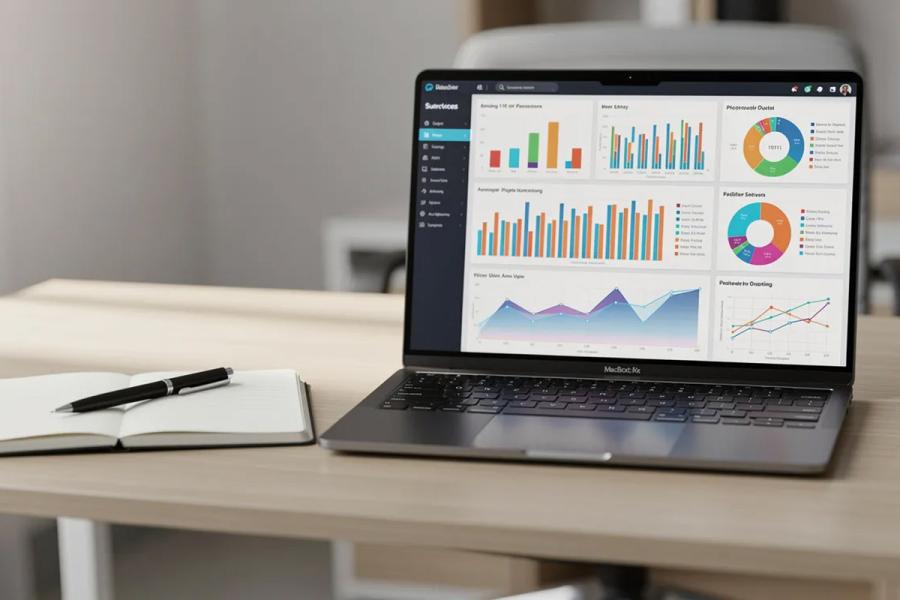
Digital project management software. Cloud-based platforms for scheduling, collaboration, and reporting have become standard. Project management software helps plan, organize, and manage resources, and project management tools improve communication and collaboration among teams. A 2025 Capterra survey found that over half of organizations cited AI as a primary driver of new project management software purchases, using it for automation, predictive scheduling, and resource optimization.
Monitoring tools. Dashboards, issue trackers, and automated alerts help project managers monitor project progress and respond quickly to deviations. Real-time visibility into schedule variance and open issues is the difference between catching a problem on Monday and discovering it at the end-of-month review.
Standardized templates. Technical proficiency includes knowledge of project management tools and methodologies, but templates do the heavy lifting of consistency. Use standardized templates for charters, risk logs, status reports, and closure summaries. They reduce setup time, ensure project documentation is complete, and make it easier to compare project performance across the portfolio.
Kanban boards - whether physical or digital - visualize work and limit work in progress for efficiency, helping teams focus on finishing tasks rather than juggling too many at once.
Best practices for project managers
Beyond methodology, great project managers rely on consistent habits and communication practices that compound over time. Project management focuses on delivering outcomes, but how you work day to day determines whether those outcomes materialize.
Invest upfront in realistic scoping. Spend time early on stakeholder analysis, expectation setting, and honest resource estimation. The effort you put into the planning project phase directly reduces conflicts and surprises later. Managing stakeholder expectations during planning is far cheaper than managing disappointment during execution.
Communicate progress clearly and regularly. Regular, concise status updates should state project progress, risks, issues, and next steps. Skip the lengthy narrative - stakeholders want to know where things stand, what's blocked, and what decisions they need to make.
Run retrospectives consistently. Continuous improvement via retrospectives and capturing lessons learned after each project or major milestone is what separates teams that get better from teams that repeat the same mistakes. Even a 30-minute debrief after a project phase creates value for future projects.
Keep developing your skills. Project management includes both process discipline and people leadership. As tools evolve - AI-assisted scheduling, real-time dashboards, integrated risk monitoring - project professionals who invest in leadership, negotiation, and data-driven decision-making stay ahead.
Project management processes are only as good as the people running them. The best project management methodology in the world won't save a project if the project manager can't communicate, make decisions, or earn trust from the project team.
FAQ
Below are answers to common questions that go beyond the main article, focused on practical guidance for anyone stepping into project management in 2024–2026.
How do I become a project manager without formal experience?
Start by managing small internal initiatives - a process improvement, a team event, or a tool migration - and document the results. Track your experience in a simple portfolio that shows how you defined goals, managed timelines, and delivered outcomes. Volunteer to coordinate cross-team tasks and take ownership of schedules, even informally. Once you have a few examples under your belt, pursue entry-level certifications like CAPM (from PMI) or PRINCE2 Foundation to formalize your knowledge. These steps can be completed within three to twelve months and demonstrate practical project management skills to hiring managers.
What is the difference between project, program, and portfolio management?
A project is a single, time-bound effort that delivers a specific product or outcome - for example, building a mobile app. Program management groups related projects managed together to achieve broader benefits over several years - such as a multi-year digital transformation that includes the app, a data platform rebuild, and a CRM migration. Portfolio management looks across all projects and programs in an organization to ensure investments align with strategy and available capacity. A single mobile app release is a project; the digital transformation it belongs to is a program; the entire set of investments the company makes is the portfolio.
Which project management methodology should my team start with?
Teams with clear, stable requirements - office build-outs, regulatory compliance implementations, infrastructure projects - may start with waterfall project management for its predictability and structured planning. Teams building digital products or running marketing campaigns with evolving requirements should consider Agile or Kanban-based approaches that allow for iteration and continuous feedback. Start simple: pilot one methodology on a small project before rolling it out widely, and adjust based on what works. The best project management methodology is the one your team will actually follow consistently. Sigma project management approaches like Six Sigma aim for near-perfection in output through data-driven processes and can complement other methodologies in quality-focused industries.
How can I manage projects effectively with a remote or hybrid team?
Establish clear communication norms: agreed meeting schedules, preferred channels for different types of communication, and response-time expectations. Use cloud-based project management software for shared plans, task tracking, and real-time updates accessible across time zones. Hold regular video check-ins focused on removing blockers and building trust, rather than just reviewing status. Most importantly, document decisions and next steps in a central, accessible place. When project team members are rarely in the same room, written documentation becomes the single source of truth that keeps the project on track.
How do I know if my project is in trouble early enough to fix it?
Early warning signs include missed interim milestones, frequent scope changes without formal approval, unclear ownership of key tasks, or rising overtime without visible progress. Use simple project monitoring metrics - schedule variance, open issues count, and risk ratings - reviewed weekly. When you spot trouble, surface concerns quickly with the project sponsor along with concrete options: reduce project scope, add resources, or extend the project timeline. Waiting until the problem is obvious to everyone is waiting too long. The earlier you act, the more options you have to deliver the project successfully.
Changed