
AI Terminology Explained: Chatbots, Assistants, Agents and More
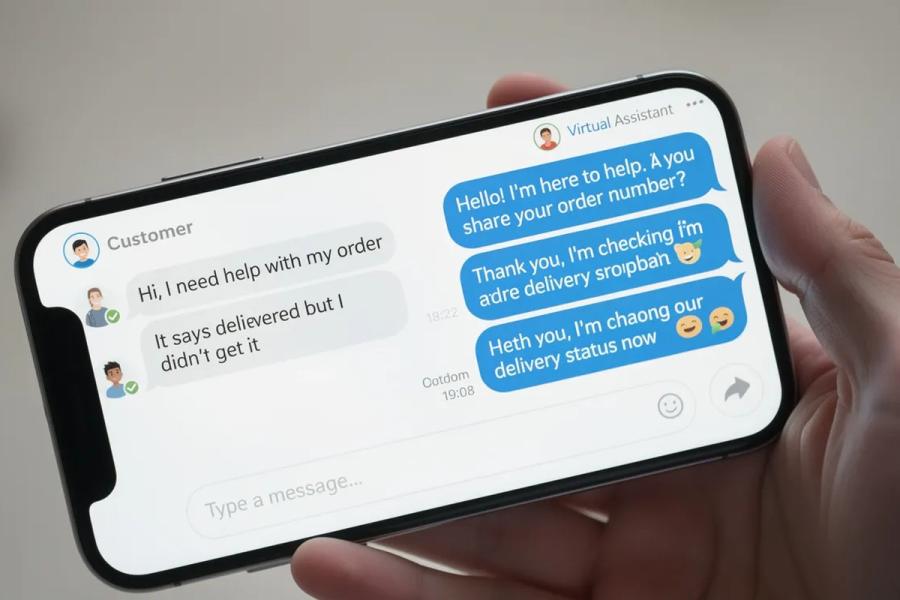
If you've spent any time researching support tools recently, you've probably noticed that every vendor seems to use different labels for what sounds like the same thing. One platform calls itself an "AI chatbot," another claims to be an "AI agent," and a third promises "conversational AI" that will transform your customer experience. This guide breaks down the terminology so you can cut through the noise and make better decisions.
Key Takeaways
- An AI chatbot answers questions in conversation, a virtual assistant helps users complete tasks one step at a time, and an AI agent can independently plan and execute multi-step workflows across systems like CRMs and payment tools.
- Customer service bots and AI-powered chatbots automate common customer interactions such as order tracking and password resets, while AI agents go further by taking actions like issuing refunds or modifying subscriptions with minimal human intervention.
- Conversational AI is the core technology enabling natural dialogue. It powers modern customer service chatbot software deployed on websites, messaging apps, and voice channels.
- When deployed correctly, AI assistants and agents deliver measurable business outcomes: 24/7 support, increased customer satisfaction, and significant cost savings.
- The rest of this article is a plain-language, glossary-style guide to every important AI term your team will encounter when evaluating AI-powered customer service tools.
Why AI Terminology Matters for Customer Service Teams
Since around 2023, terms like "AI chatbot," "AI agent," and "conversational AI" have exploded across vendor marketing. For support leaders trying to compare tools, this flood of jargon makes it genuinely difficult to know what you're buying.
Here's why understanding the terminology matters in practice:
- Choosing the right tool. Knowing the difference between a simple bot and a full AI agent prevents you from overpaying for features you don't need or underpaying for capabilities you do.
- Common confusion is real. People routinely use "bot," "assistant," and "agent" interchangeably, even though each implies different capabilities and levels of autonomy.
- Practical scenario. Imagine a support manager in 2026 deciding between a basic FAQ bot and an advanced AI agent that can modify subscriptions in real time. Without understanding the terms, both products look the same on a features page.
Each section below decodes one cluster of terms with concrete definitions and customer interaction examples.
Foundations: Artificial Intelligence, Machine Learning, and Generative AI
Before diving into chatbots and agents, it helps to define the umbrella concepts behind all of them.
Artificial intelligence is the broadest term. It refers to computer systems that mimic human capabilities like recognizing language, spotting patterns, and making decisions. Artificial intelligence (AI) mimics human capabilities using computer systems. Everyday examples include spam filters and systems that route customer tickets to the right department.
Machine learning is a subset of AI that learns from data instead of being explicitly programmed. Machine learning (ML) is a subset of AI that learns from data. For instance, a support routing model that improves accuracy after processing thousands of customer queries is using ML. Within ML, supervised learning uses labeled data for training models, unsupervised learning discovers patterns in unlabeled data, and reinforcement learning involves learning by receiving rewards or penalties. Deep learning (DL) is a branch of ML that uses neural networks with many layers, and neural networks themselves are inspired by the human brain and consist of interconnected units.
Generative AI creates new content-text, images, code-based on learned patterns from data. In support, that means drafting email replies or summarizing long threads. Large language models (LLMs) are trained on vast text data to generate human-like language, and they power most modern AI chatbots. During training, parameters are internal variables adjusted to capture nuances of language, while tokens are the basic units of text processed by language models. Techniques like transfer learning reuse a model trained on one task for another related task, fine-tuning adapts a pre-trained model to a narrower task, and prompt engineering refines inputs to optimize AI responses.
Most customer service bots marketed today combine ML and generative AI to understand customer questions and generate answers dynamically rather than relying only on fixed scripts.
Conversational AI: The Engine Behind Modern AI Chatbots
Conversational AI is the technology stack that lets software hold human-like conversations via text or voice. Think of it as the engine running underneath every modern chatbot, assistant, or agent.
The key building blocks in simple terms:
- Natural language processing (NLP) is the broad discipline of processing human language input-text or speech-into something machines can work with. AI chatbots use natural language processing to understand user intent.
- Natural language understanding (NLU) is the part of NLP focused on interpreting meaning. Natural language understanding helps chatbots interpret user intent, distinguishing between "I'd like to cancel my order" and "Can I change my order?" NLU helps chatbots interpret user intent accurately.
- Natural language generation (NLG) is how the system produces coherent, on-brand replies in natural language, rather than spitting out robotic templates.
AI chatbots use NLP and ML for human-like conversations across channels. You can see conversational AI in action through live chat widgets on ecommerce websites, customer service bots in WhatsApp, and smart IVR phone systems that understand spoken questions instead of forcing callers through number menus.
Unlike traditional menu-based bots, conversational AI interprets free-form human language, maintains context across an entire conversation, and can personalize responses throughout the customer experience. It's used by both AI chatbots and AI assistants, and is increasingly embedded in AI-powered tools throughout the contact center.
What Is a Chatbot? From Rule-Based Scripts to AI Chatbots
"Chatbot" is the broad, older term for any software that chats with users via text or sometimes voice. But not all chatbots are created equal.
Traditional rule-based chatbots follow decision trees, button flows, and keyword triggers. Traditional chatbots use predefined rules for responses. Picture a 2018-style bot on a shipping page that only works if you click "Track Order" or "Return Item"-any deviation, and it's stuck. These bots can't interpret varied phrasing or handle unexpected user input.
AI chatbots are chatbots enhanced with NLP, ML, and often generative AI. AI chatbots leverage natural language processing and machine learning to interpret varied phrasing and respond flexibly. They can understand user intent and context, generate responses beyond pre-programmed scripts, and learn from interactions to improve responses over time. Generative AI allows chatbots to create original responses rather than picking from a fixed list. Large language models enhance chatbot response generation quality significantly.
Here's how they compare in practice:
| Feature | Rule-Based Chatbots | AI Chatbots |
|---|---|---|
| Question coverage | Only predefined rules | Broad, adapts to phrasing |
| Maintenance | Manual updates for every scenario | Learns and improves over time |
| Customer experience | Rigid, often frustrating | Natural conversation flow |
| Setup | Can be fast but limited | Creating a chatbot can be done in minutes with the right tools |
A critical stat to keep in mind: 72% of customers won't reuse a chatbot after one negative experience. This makes the difference between rule-based and advanced AI chatbots a genuine business risk, not just a technical preference. AI chatbots that deliver quick and accurate responses reduce customer frustration and keep people coming back.
Customer Service Bots and Customer Service Chatbot Software
Customer service bots are AI-powered chatbots designed specifically for support and service use cases across industries like ecommerce, SaaS, banking, and travel.
These bots resolve common customer issues: order status checks, password resets, returns, billing questions, and basic troubleshooting. They can automate routine tasks, freeing human agents for complex issues that require emotional intelligence and judgment. Chatbots can reduce customer service costs by automating routine tasks. AI chatbots can provide personalized interactions based on user data and customer data from past interactions.
Modern customer service chatbot software in 2024–2026 typically includes:
- A visual conversation builder for designing flows
- Integration connectors for CRMs, help desks, and knowledge base systems
- Analytics dashboards tracking resolution rates and customer satisfaction
- Multichannel deployment across communication channels
Chatbots can be integrated into websites and messaging apps. A single bot can unify customer interactions across website widgets, in-app chat, email deflection, and messaging platforms like Messenger, WhatsApp, and SMS. This means support across multiple channels and social media channels without managing separate systems.
The numbers back up the value. TELUS Digital's internal HR bot increased customer satisfaction by 24%, reduced ticket volume by 27%, saved approximately $135,000 per year, and freed up roughly 6,900 agent hours annually. In banking, approximately 98 million U.S. users engaged with bank chatbots in 2022, projected to grow to roughly 110.9 million by 2026. Chatbots provide 24/7 availability for customer support, and 58% of customers use chatbots for simple service tasks as of 2023. They can handle multiple inquiries simultaneously, improving efficiency across the board.
AI Assistants: From Personal Helpers to Business Productivity Tools
AI assistants (or virtual assistants) go beyond pure customer support to help individuals or teams accomplish a wider range of real world tasks.
In the consumer world, you know them as Google Assistant, Siri, or Alexa-voice assistants tied to smart devices and capable of controlling smart home devices, setting reminders, and answering questions. These handle user requests like checking weather, managing calendars, or controlling smart home devices through natural conversation in a human like manner.
In a business context, AI assistants support human agents as internal productivity tools. They can answer policy questions from a knowledge base, generate reports, surface relevant customer data during calls, and guide agents through complex customer interactions. They respond to user queries, understand user preferences, and help complete tasks one step at a time.
A concrete example: a healthcare AI triage assistant in a senior-care network achieved 45% faster triage with 92% clinician agreement on urgency tiers. It recommended next steps to nurses rather than making diagnoses independently-a clear example of how AI assistants support human agents rather than replace them.
How do AI assistants differ from AI chatbots? Assistants usually have broader scope, deeper personalization based on chat history and past interactions, and more integration with calendars, files, and productivity apps. While a chatbot might answer questions about your return policy, an AI assistant might also summarize the customer's entire history and suggest the best resolution path for the human interaction.
AI Agents: More Autonomous, Goal-Driven AI
An AI agent is a newer concept that gained traction after 2023. It describes AI that doesn't just chat but takes actions toward goals with some autonomy. AI agents perform actions towards goals rather than just producing responses.
Core characteristics of an AI agent:
- Autonomy: decides its own sequence of steps rather than waiting for human users to trigger each action
- Goal orientation: given an objective, it plans how to achieve it
- Perception: reads data from APIs, databases, and systems to understand the current state
- Action: executes changes inside other systems-CRMs, ecommerce platforms, ticketing tools
In customer service, a virtual agent might proactively contact customers about delayed deliveries, issue refunds within policy, or update subscriptions without human intervention. A utility company using agentic AI now handles approximately 40% of all inbound calls through several agents, resolving more than 80% of those without human involvement.
The difference from AI chatbots is significant: chatbots focus on conversational responses within a chat window. AI agents use conversation as just one interface while orchestrating workflows and tools behind the scenes. They can perform tasks across automated systems, handle routine inquiries, and manage complex business processes end-to-end.
Looking ahead, multi-agent systems-where several specialized AI agents collaborate on a single task-are emerging. Google Cloud's trends report forecasts that agentic workflows will reshape business operations, with open protocols enabling AI agents to coordinate across platforms.
Keep in mind: about 75% of enterprise leaders say they're adopting agentic AI, but few have fully autonomous systems in production. Many products marketed as "agents" are really conversational chatbots with an LLM underneath-watch for "agent-washing."
Key Capabilities Shared Across Bots, Assistants, and Agents
Regardless of the label, any AI-powered solution you evaluate should be assessed on these cross-cutting capabilities:
- Understanding and generation. Can it parse natural language, keep context across multiple turns of human conversation, and generate accurate responses that match your brand tone? Retrieval-Augmented Generation (RAG) improves AI accuracy through external data retrieval before generating responses, which is increasingly important. Watch out for hallucination, which occurs when an AI generates false information confidently-a risk with any generative system.
- Integrations and tool use. Does it connect to your CRM, help desk, inventory system, or payment gateway so the AI models can both read and update real business data? Without integrations, even advanced AI bots are limited to conversation only.
- Learning and optimization. Can AI chatbots learn from interactions to improve responses? Look for feedback loops, retraining on conversation logs with data privacy concerns handled properly, and A/B testing of conversational flows.
- Safeguards. Escalation to human agents when confidence is low, audit trails for AI decisions (especially with AI agents acting autonomously), and controls to prevent unauthorized actions are non-negotiable.
How AI Tools Improve Customer Interactions and Customer Experience
The goal of all these AI technologies isn't flashy tech-it's better customer interactions and an upgraded customer experience.
AI-powered chatbots can respond to customer requests instantly at any hour, reducing wait times and abandonment on support and sales pages. They handle repetitive tasks like answering customer questions about shipping or store hours, providing instant responses that support customers without making them wait.
AI assistants support human agents in real time with suggested replies and knowledge surfacing. This leads to higher first-contact resolution and more consistent answers across your team, even for new hires. The combination of human interaction and AI capabilities creates a stronger support operation than either alone.
More advanced AI agents personalize the buying process: recommending products based on user preferences, detecting customer frustration mid-conversation, handing off to a human at the right moment, and even proactively preventing issues before customers notice them.
Firms using AI capabilities report approximately 3.5 times greater year-over-year increases in customer satisfaction-around 10.1% vs. 2.9% for non-AI users-and similar improvements in retention. That translates directly into increased customer satisfaction and loyalty.
Business Benefits: Cost Savings, Scalability, and Revenue Growth
Beyond customer experience, leaders adopt AI tools for their financial impact on business operations.
- Cost savings. Fewer repetitive tasks for human agents, ability to handle spikes (Black Friday, product launches) without proportional headcount increases. AWS reported that deflecting just 2% of call volume yielded approximately 3,600 agent hours saved per month-roughly $90,000 monthly in labor, or over $1 million per year.
- Scalability. AI chatbots and AI assistants manage thousands of simultaneous customer interactions globally, across multiple languages, time zones, and messaging apps, without proportional staff increases. This operational efficiency is hard to replicate with hiring alone.
- Revenue. AI-powered sales bots and service agents recommend cross-sells, rescue abandoned carts, and run marketing campaigns that keep customers engaged through the buying process, directly impacting conversion rates.
For ROI measurement, track deflected tickets, bot resolution rates, increased average order value, and lifetime value improvements. These metrics tell you whether your AI investment is paying off.
How to Choose and Implement AI-Powered Chat Solutions
With terminology clarified, here's how to evaluate and roll out AI solutions responsibly.
Key evaluation criteria:
- Quality of conversational AI and how it handles natural conversation
- Ease of training on your own knowledge base and content
- Integration depth with your existing tools
- Analytics and reporting
- Security, compliance, and data privacy concerns
Match the tool to the problem. If you mainly need to answer questions and handle routine inquiries (FAQs, store hours), a simple AI chatbot is enough and faster to deploy. If you need transaction handling, multi-system workflows, or proactive outreach, you're in AI agent territory. Don't deploy an agent for a chatbot-sized problem-it adds unnecessary complexity and cost.
Phased rollout works best. Start with a narrow use case like order tracking, measure impact, then expand to more complex customer service bots and AI agents. Plan a pilot period of 2–4 weeks where the bot runs in monitored mode before full rollout.
Change management matters. Prepare agents to work alongside AI assistants, set clear escalation policies, and communicate new AI-powered support options to customers before launch.
Putting AI Terminology into Everyday Language
Here's a quick recap of each core term:
- AI chatbot: software that converses with customers to answer questions and handle simple user requests, using NLP and ML.
- Customer service bots: AI chatbots specialized for support tasks like order tracking, returns, and billing across communication channels.
- AI assistants: broader tools that help people complete tasks, from scheduling meetings to coaching human agents during calls.
- AI agents: autonomous, goal-driven systems that plan steps, use tools, and take actions across business processes with limited human oversight.
- Conversational AI: the underlying technology stack enabling all of the above to hold human like conversations.
A simple analogy: chatbots are your front-desk reception, assistants are personal aides, and agents are autonomous specialists who can both talk to people and act inside systems.
By the late 2020s, most digital customer interactions will involve some combination of these AI-powered tools. Use this glossary-style understanding when assessing vendors and planning your own AI roadmap for customer experience and support.
Essential AI Terms
Artificial Intelligence (AI): The broad field of computer science focused on building systems capable of performing tasks that typically require human intelligence, such as problem-solving, visual perception, and decision-making.
Machine learning (ML): A subset of AI where computers learn patterns directly from data to make predictions or decisions, rather than following explicitly programmed rules.
Deep learning: A subfield of machine learning that uses multi-layered artificial neural networks to process complex, unstructured data like images, speech, and video.
Large Language Model (LLM): An AI model trained on massive amounts of text to predict next words, comprehend context, and generate fluent, human-like responses.
Generative AI: Systems engineered to create brand-new content—including text, images, synthetic audio, and code—based on user prompts.
Prompt: The text input, question, or context given to an AI model to guide the generation of a specific response.
Hallucination: A phenomenon where an AI model generates factually incorrect, nonsensical, or entirely fabricated information while presenting it with high confidence.
Neural network: A computational architecture modelled after biological brains, organised into layers of interconnected nodes ("neurons") that mathematically process and transform data.
Training data: The foundational dataset used to teach an AI model patterns, structures, facts, and relationships.
Fine-tuning: The process of taking a broad, pre-trained model and training it further on a smaller, specialised dataset to adapt it for a specific task or domain.
Algorithmic bias: Systematic, unfair errors or prejudices in AI outputs that typically stem from skewed, unrepresentative, or historically prejudiced training data.
Token: The basic unit of data an LLM processes. In text models, a token represents a common word, subword, or punctuation mark (roughly 4 characters or 0.75 words in English).
FAQ
Is there a simple way to decide if I need a basic chatbot or a full AI agent?
If your goal is mainly answering repetitive questions-FAQs, order status, store hours-an AI chatbot is usually sufficient and faster to deploy. If you want the system to actually perform actions like changing bookings, creating tickets, or processing returns across multiple tools with minimal human input, you're in AI agent territory. Many companies start with a chatbot and gradually layer in agent-like capabilities as they see results.
Can small businesses benefit from AI-powered chatbots, or is this only for large enterprises?
Modern AI chatbot software is accessible to small businesses, often with pay-as-you-go pricing and no-code setup. A small online store can use an AI-powered chatbot to answer shipping and product questions around the clock, freeing the owner from late-night support. Starting with a narrow, high-volume use case lets small teams see quick cost savings without heavy upfront investment.
What data does an AI assistant or chatbot need access to, and is it safe?
Effective AI chatbots and assistants typically need access to knowledge sources like FAQs, help center articles, product catalogs, and sometimes CRM data to personalize answers. Reputable platforms provide controls over what data is used, how long it's stored, and how it's anonymized, along with compliance features like GDPR-ready consent flows. Ask vendors specifically about data residency, encryption, and options to opt out of training global models on your proprietary data.
How long does it usually take to launch an AI-powered customer service bot?
A simple AI chatbot trained on an existing help center or website can often go live within a few days after configuration and basic testing. More advanced AI agents that integrate deeply with order systems, billing, or CRMs may take several weeks to design, integrate, and validate safely. Plan a pilot period of 2–4 weeks where the bot runs in a monitored mode before full rollout.
Will AI assistants replace human support agents?
In most organizations, AI assistants and customer service bots handle repetitive questions and routine tasks, while human agents focus on complex, emotional, or high-value conversations that require empathy and judgment. This combination often improves job quality for human agents by reducing burnout from repetitive tickets and giving them AI-powered tools to resolve cases faster. View AI as augmentation rather than replacement, especially in customer-facing roles.
Changed